
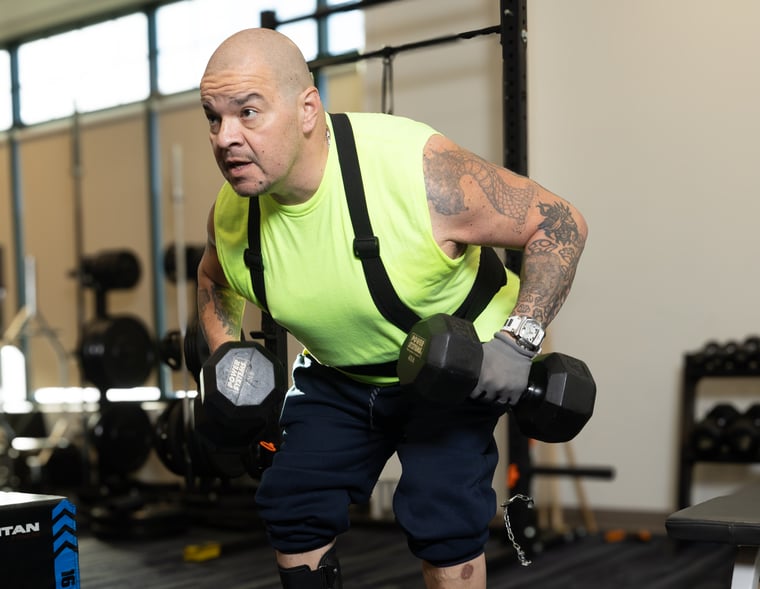
A neurological condition or injury can affect much more than movement. It may change the way a...
The Real Effects of Age-Related Muscle Loss
Sarcopenia is the progressive loss of muscle mass, strength, and function that occurs with aging. While it’s common, it is also one of the most under-recognized threats to long-term health, independence, and longevity.
As a physical therapist, I see the effects of sarcopenia every day. It often shows up as difficulty standing up from a chair, slower walking speed, or trouble climbing stairs.
These changes aren’t just inconvenient. They are strongly linked to loss of independence, increased fall risk, hospitalization, and even earlier mortality.
The good news? Sarcopenia is highly modifiable and isn’t simply “getting old.”
What Exactly Is Sarcopenia?
Sarcopenia is more than “losing muscle.”
It is a measurable and progressive condition involving:
- Decreased muscle mass
- Reduced muscle strength
- Impaired muscle power (how quickly you can produce force)
- Decline in physical performance (walking speed, chair rise ability, balance)
It affects both the size of muscle fibers and the quality of muscle tissue.
With aging:
- Fast-twitch (power-producing) fibers shrink
- Motor neurons decline
- Muscle tissue becomes infiltrated with fat
- The body becomes less sensitive to protein intake
- Recovery slows down
Over time, muscles become smaller, weaker, slower, and less responsive.
Muscle loss can begin in our 30s. After age 50, the rate often accelerates — especially without resistance training.
What Actually Causes Sarcopenia?
Aging contributes, but aging alone does not cause severe muscle loss.
The primary driver is insufficient muscle loading over time.
Let’s simplify that. Your body adapts to what you repeatedly ask it to do.
If you:
- Lift
- Carry
- Climb
- Squat
- Push
- Pull
Your body gets the message:
“These muscles are required. Maintain and strengthen them.”
If you don’t challenge them enough, your body gets a different message:
“These muscles are not essential. Reduce them.”
Muscle is metabolically demanding tissue. Your body will not maintain it unless it has to.
This is why inactivity, prolonged sitting, injury, illness, rapid weight loss, and certain medications (including GLP-1 medications when not combined with resistance training) can accelerate sarcopenia.
Sarcopenia is not inevitable. Progressive loading of muscle is our best preventative medicine.
How Sarcopenia Shows Up in Daily Life
Sarcopenia often appears subtly at first.
You might notice:
- Difficulty rising from chairs
- Needing to push off with your arms
- Slower walking speed
- Difficulty climbing stairs
- Reduced endurance
- Avoiding activity due to fear of falling
- Decreased grip strength
Over time, this creates a negative cycle.
The Sarcopenia Downward Spiral
Less Strength
↓
Less Activity
↓
More Muscle Loss
↓
Higher Fall Risk
↓
Injury or Hospitalization
↓
Even Less Activity
↓
Accelerated Decline
This cycle is one of the biggest drivers of loss of independence in older adults.
The key is interrupting it early.
The Metabolic Impact of Muscle Loss
Muscle is not just for movement. It is a major metabolic organ. Unlike fat or bone, muscle is constantly using energy, even at rest.
Healthy muscle helps:
- Regulate blood sugar
- Improve insulin sensitivity
- Maintain bone density
- Reduce systemic inflammation
- Support cardiovascular health
- Support brain health
- Maintain resting metabolic rate
When muscle mass declines:
- Blood sugar regulation worsens
- Insulin resistance increases
- Metabolic rate decreases
- Fat gain becomes easier
- Frailty risk rises
Sarcopenia is not just a strength issue. It is a whole-body health issue.
Why Resistance Training Is the Treatment for Sarcopenia
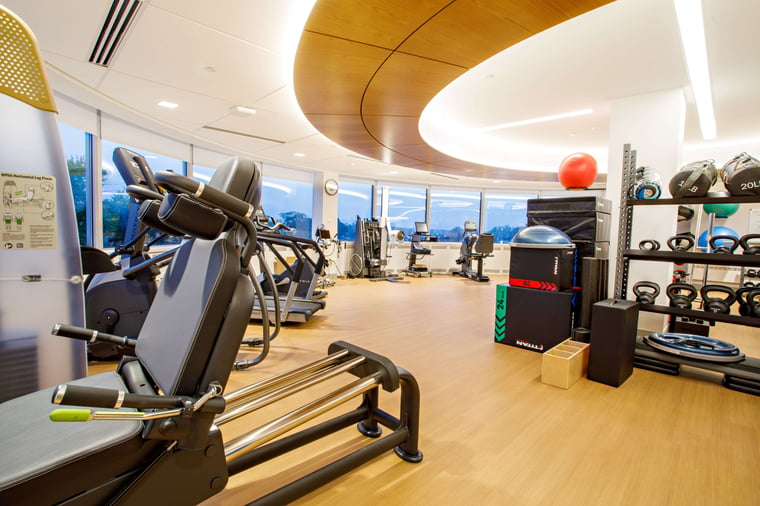
The most effective way to prevent or reverse sarcopenia is resistance training. Muscles grow and strengthen when they are challenged close to their capacity.
Here’s what matters most:
It’s not how heavy the weight is. It’s how hard the muscle is working.
You can challenge muscle by:
- Using lighter weights for more repetitions
- Using heavier weights for fewer repetitions
Both work as long as the final repetitions feel difficult. The muscle must approach fatigue. That effort is what stimulates adaptation.
Important: There Is No Age Requirement
One of the most important truths about sarcopenia:
You can begin improving muscle health at any level, at any age.
If a traditional squat is too difficult, use a higher chair.
If bodyweight is too hard, use assistance from your hands on the counter.
If standing is difficult, start seated.
Adaptation, not avoidance, is the solution.
Want to work with an expert? Call (203) 284-2888 to schedule a physical therapy evaluation.

This content is for educational purposes only and is meant to provide general information. It is not a substitute for professional medical advice, diagnosis, or treatment. Always consult your healthcare provider with any questions or concerns about your health. In case of a medical emergency, contact your doctor or call 911 right away.
Related posts
.jpg?height=500&name=samantha-gades-k95uqdEe8R4-unsplash%20(1).jpg)

GLP-1 medicines can help lower blood sugar, lower appetite, and support weight loss. Despite the...

At any age incorporating resistance exercises can help people have better mobility for longer.