

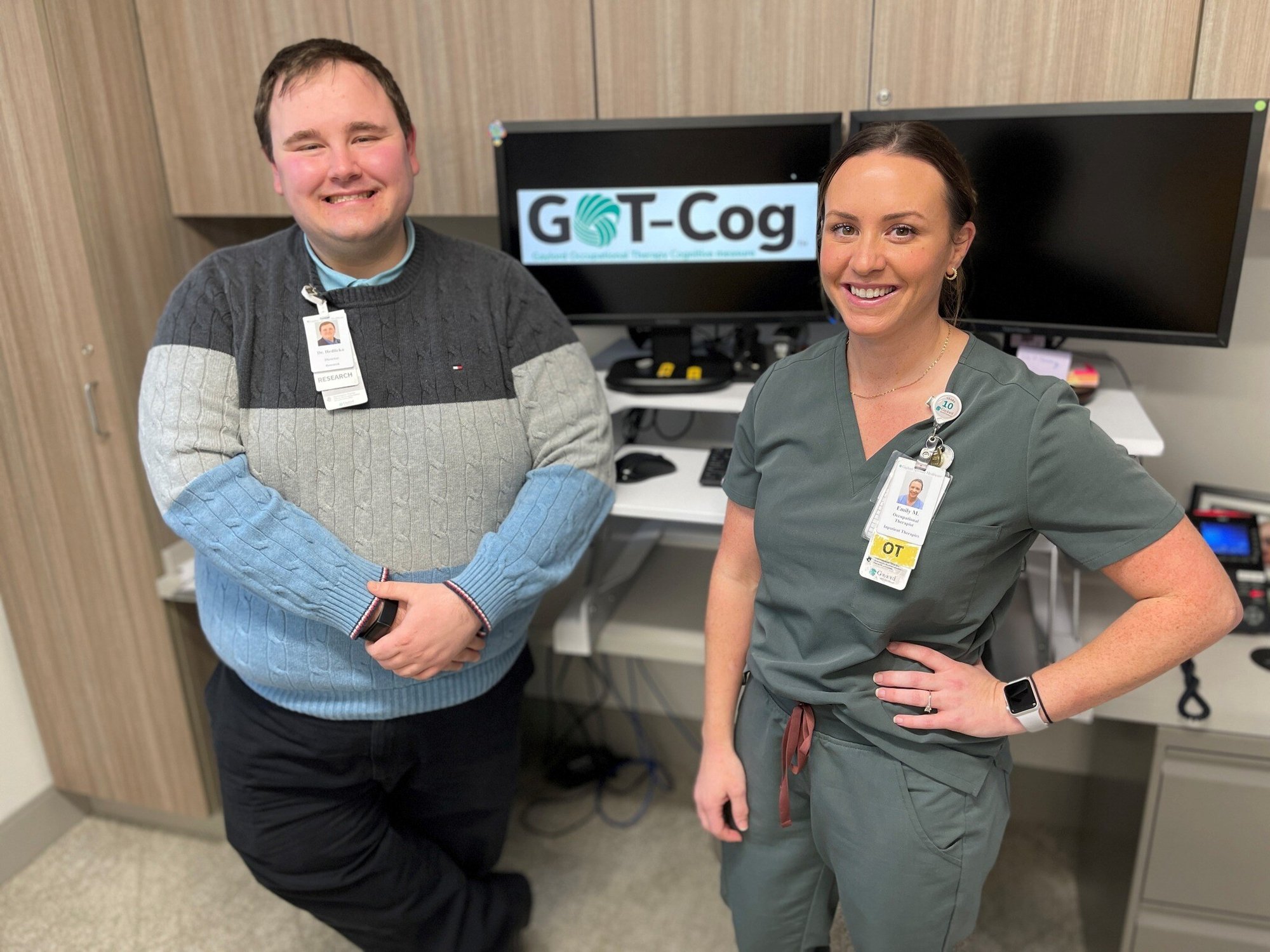
GOT-Cog®: Gaylord Occupational Therapy Cognitive Screen
Developed at Gaylord Specialty Healthcare, GOT-Cog® helps clinicians assess functional cognition and its impact on daily activities, rehabilitation participation, and discharge readiness.

The Gaylord Occupational Therapy Cognitive Screen (GOT-Cog®) is a standardized cognitive screening measure designed to evaluate cognitive skills through a functional, occupational therapy-focused lens.
Unlike traditional cognitive screens that may focus primarily on memory or orientation alone, GOT-Cog® assesses how cognition impacts everyday function, including activities of daily living (ADLs), instrumental activities of daily living (IADLs), safety awareness, and the ability to participate meaningfully in rehabilitation.
Developed by: Emily Meise, MS, OTR/L, CLT, CBIS, CSRS Inpatient Occupational Therapist at Gaylord Specialty Healthcare
Administration time: Approximately 10 - 15 minutes
Designed for: Rehabilitation and inpatient therapy sessions
Treatment Planning
Supports occupational therapists in developing targeted, function-focused care plans.
Progress Tracking
Monitors cognitive changes over time to help measure rehabilitation progress and response to therapy.
Discharge Planning
Helps clinicians make informed recommendations for safe discharge and ongoing support needs.
Team Communication
Provides a shared clinical language that supports interdisciplinary collaboration and care coordination.
Safety Awareness
Identifies cognitive deficits that may impact judgment, independence, and everyday safety.
Additional Evaluation Needs
Helps identify patients who may benefit from further cognitive, speech, or neuropsychological assessment.
Designed for Rehabilitation-Focused Care
GOT-Cog® emphasizes functional cognition and rehabilitation participation, making it especially valuable in settings where cognitive performance directly impacts recovery and independence.
The assessment may be appropriate for:
- Inpatient rehabilitation populations
- Neurologic rehabilitation
- Medically complex patients
- Orthopedic rehabilitation patients
- Patients recovering from stroke, brain injury, or critical illness
Clinical judgment should always be used to determine appropriateness for administration. The tool may not be appropriate for individuals with significant communication impairments, advanced dementia, or inability to sustain participation.
Links for GOT-Cog® Research & Resources:
Learn How to Administer the GOT-Cog® Test
Learn how to administer and score the GOT-Cog® Occupational Therapy Cognitive Screen through this clinician training overview. This video walks through the assessment process, scoring methodology, and best practices to support standardized administration across clinical settings. Then, request the assessment by completing the form below.
Frequently Asked Questions
Who can use the GOT-Cog® assessment?
GOT-Cog® is designed for trained and qualified rehabilitation and healthcare professionals, particularly occupational therapists working in rehabilitation settings. It has been tested in individuals 18 years or older.
How long does the assessment take?
Administration typically takes approximately 10 to 15 minutes.
Is GOT-Cog® a diagnostic tool?
GOT-Cog® is designed for trained and qualified rehabilitation and healthcare professionals, particularly occupational therapists working in rehabilitation settings to support decision making, referrals, as well as treatment and discharge planning.
Can GOT-Cog® be used to track progress over time?
Yes. Clinicians may use GOT-Cog® scores alongside observed functional performance to help monitor cognitive changes throughout rehabilitation.
Is training required to administer GOT-Cog®?
Administration should be completed by qualified healthcare professionals using standardized procedures and clinical judgment. You can view the training video here.
What areas does GOT-Cog® assess?
GOT-Cog® evaluates multiple domains of cognition that are critical to functional independence and rehabilitation participation, including:
-
Verbal Fluency: Items 1 - 2
-
Attention: Items 3 - 4
-
Orientation: Items 5-9
-
Short-Term Delayed Recall: Items 10 & 22
-
Visuospatial: Items 11 - 12
-
Divided Attention: Item 13
-
Auditory Memory: Items 14-17
-
Sequencing: Item 18
-
Functional Problem Solving: Items 19-21
The assessment incorporates clinically relevant tasks tied to real-world activities, such as medication management, clock drawing, sequencing, and delayed recall.
Where can GOT-Cog® be used?
GOT-Cog® has been formally validated in the Long Term Acute Care Hospital (LTACH) setting.