
.jpg?width=760&height=428&name=vitaly-gariev-Pg4bY_O1kh8-unsplash%20(1).jpg)
Can You Have a Concussion with a Normal CT Scan or MRI?
Myth: If my CT scan or MRI is normal, it means I don’t have a concussion.
Fact: You can have a concussion even if your brain imaging looks completely normal.
I see this often with patients who come to Gaylord Specialty Healthcare after a concussion. They may have gone to the emergency room, had a CT scan or MRI, and been told their imaging was normal. Then they wonder, “If my brain scan looks fine, why am I still having headaches, dizziness, fatigue, or trouble concentrating?”
The answer is that a normal scan is actually very common after a concussion.
Why Can You Have a Concussion with a normal CT Scan or MRI?
A concussion is a mild traumatic brain injury that typically does not involve visible structural damage to the brain.
That means your brain may look normal on imaging because there is no bleeding, swelling, fracture, or other structural injury that these scans are designed to detect.
And that is good news.
A normal CT scan or MRI means your brain is physically intact. However, it does not explain every symptom you may experience after a concussion.
A concussion affects how the brain functions and how it processes information. Communication between different brain systems may be disrupted, leading to symptoms even when imaging appears normal.
What Do CT Scans and MRIs Look for After a Head Injury?
CT scans and MRIs are valuable tools, especially after a significant head injury. They are designed to identify structural changes in the brain, such as:
- Bleeding in or around the brain
- Swelling
- Structural injuries
- Other abnormalities that require medical attention
However, these scans are not designed to measure many of the functional changes that can occur after a concussion.
That is why someone can have a normal CT scan or MRI and still experience symptoms.
What Symptoms Can You Have After a Concussion with Normal Imaging?
Even with normal brain imaging, people can experience symptoms such as:
- Headaches
- Dizziness
- Balance problems
- Sensitivity to light or sound
- Fatigue
- Difficulty concentrating
- Feeling slowed down or “foggy”
- Problems with memory or thinking
These symptoms are real and can happen even when a scan does not show an abnormality.
Does a Normal MRI or CT Scan Mean My Symptoms are “All in My Head”?
If your symptoms continue after a concussion, a normal scan does not mean your symptoms are not real.
It means your injury is not showing up as a structural change on imaging, which is common with concussions. 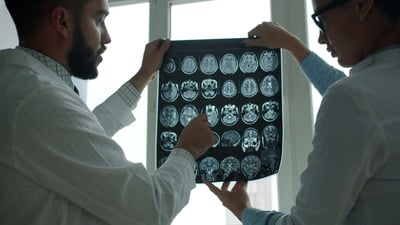
A comprehensive concussion evaluation at Gaylord Specialty Healthcare can help identify what systems may be contributing to your symptoms and guide the right treatment approach.
Does a Normal Scan Mean I Will Not Recover?
A normal CT scan or MRI does not determine whether you will recover quickly or slowly.
Every concussion is different, and recovery depends on many factors, including your symptoms, your individual health history, and how your brain and body respond after injury.
The good news is that having no findings on imaging is generally a positive sign. It means there is no evidence of structural damage that requires medical intervention.
When Should You Seek a Concussion Evaluation?
If your symptoms are not improving after a concussion, don’t assume you simply have to wait it out.
A concussion evaluation can help determine what is contributing to your symptoms and identify the next steps in your recovery.
At Gaylord Specialty Healthcare, I work with patients to understand how their concussion affects their daily lives and to develop individualized treatment plans to help them safely return to the activities that matter most.
The Bottom Line
Myth: A normal CT scan or MRI means you did not have a concussion.
Fact: A concussion can occur even when brain imaging is completely normal.
A normal scan is good news, but it does not mean your symptoms are imaginary or that there is nothing to treat. A concussion evaluation can help identify what is causing your symptoms and provide a path forward.
Want to speak to an expert about treatment for concussion? Contact us at (203) 284-2888 or fill out an appointment request form on our outpatient neurological rehabilitation page.

This content is for educational purposes only and is meant to provide general information. It is not a substitute for professional medical advice, diagnosis, or treatment. Always consult your healthcare provider with any questions or concerns about your health. In case of a medical emergency, contact your doctor or call 911 right away.
Related posts


Have you ever felt like the room was spinning, tilting or moving even though you were standing...

WALLINGFORD, CONNECTICUT, February 6, 2025 - Gaylord Specialty Healthcare is pleased to announce...